How to Keep Your Prayers on Time on Holiday
A calm, practical way to protect your prayers while travelling, without turning your holiday into pressure or panic.
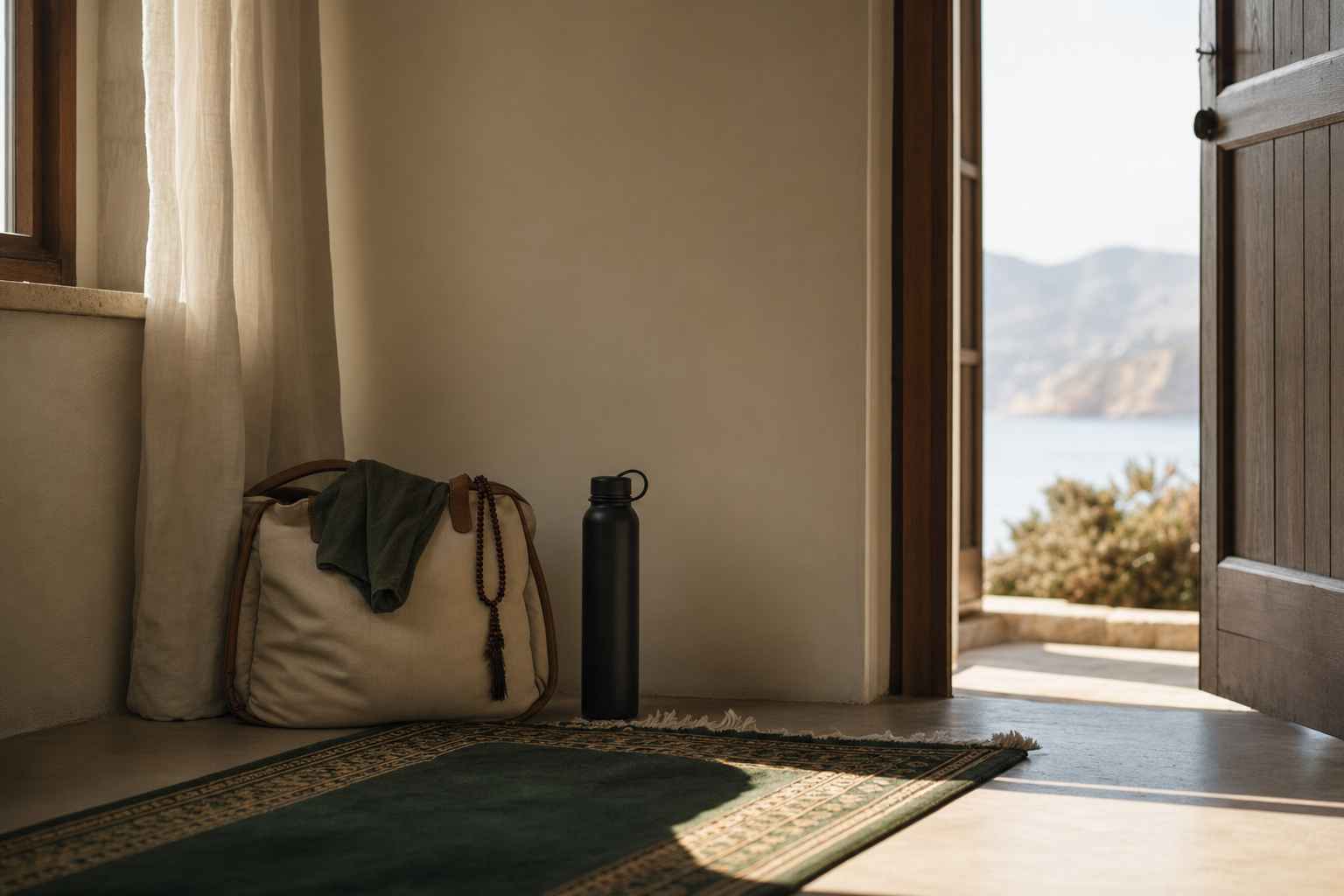
You keep your prayers on time on holiday by planning the day before the day carries you away. Check the local prayer times each morning, notice which outings overlap with prayer windows, and decide in advance where you are likely to pray. A holiday changes your surroundings, but it does not need to make prayer feel impossible.
Keep the plan simple: know the times, keep wudu when you can, carry a small prayer kit, and be willing to pause for a few quiet minutes. If you are travelling a distance, there may be rulings about shortening or combining prayers, but the details can differ by situation and school of thought, so ask someone knowledgeable before you rely on them.
Start the day with prayer times, not panic
On holiday, the hardest prayer is often the one you did not see coming.
You leave the hotel after breakfast, the walk takes longer than expected, lunch turns into a queue, the tour bus will not stop, and suddenly a prayer window feels tight. This is not always neglect. Sometimes it is simply the pace of travel.
So begin with a two-minute check. Look at the prayer times for your exact location, especially if you have crossed cities, countries, time zones, or a long route. Then ask yourself one gentle question: which prayer is most likely to be difficult today?
Maybe Dhuhr falls during a museum visit. Maybe Asr lands while you are on a mountain road. Maybe Maghrib arrives while everyone is sitting down to dinner. Once you can see the likely pressure point, you can make one small adjustment before the day becomes crowded.
This is part of guarding prayer. The Quran describes careful maintenance of prayer as a quality of believers. That care is not only felt in the heart. It often appears in small, ordinary choices: leaving ten minutes earlier, praying before entering a long attraction, or choosing a lunch place near a clean corner or mosque.
Build prayer into the route
Try not to treat prayer as an interruption to the holiday. Let it become one of the anchors of the day.
When you look at your plan, place prayer beside the things already fixed: check-out time, train time, dinner booking, tour departure. If you can make space for transport, tickets, meals, and photos, you can usually make space for a few minutes with Allah.
Before leaving your accommodation, identify two possible prayer points. One could be a mosque. Another could be a quiet, clean space: a park corner, a family room, a quiet area in an airport, a clean patch near the car, or your hotel room before leaving.
If you are with family or friends, say it plainly and early. You do not need a long explanation. Something like: “Dhuhr comes in around 1:20, so I’ll need about ten minutes before we go into the next place.” Specific requests are easier for people to honour than vague ones. They also prevent prayer from becoming a sudden negotiation when everyone is tired.
If you are on an organised tour, ask the guide at the start of the day whether there will be a short stop around the relevant time. Keep your tone calm and practical. Most people respond better to a clear request than to last-minute stress.
Make it easy to pray anywhere clean
A small prayer kit can remove a surprising amount of hesitation.
You do not need something elaborate. A compact prayer mat, clean socks, a small bag, and whatever you normally need for wudu can be enough. If you are travelling with children, keeping the kit in the same backpack each day helps everyone know where it is.
Wudu is often the hidden difficulty. If you wait until the last few minutes, you may find yourself searching for a bathroom, standing in a queue, or feeling awkward in a crowded place. When possible, renew wudu before leaving the hotel, after meals, or whenever you pass a suitable bathroom. You are not trying to control the whole day. You are reducing the number of decisions you need to make later.
Also give yourself transition time. If Asr begins at 4:10, do not plan as though you will magically be ready at 4:10. You may need to find a place, make wudu, face the qiblah, and settle your mind. A small buffer can turn a rushed prayer into a calmer one.
If the day goes wrong, return gently
Some holiday days will not go smoothly. Flights are delayed. Roads close. Children melt down. Group plans change. You may intend well and still find yourself struggling.
Do not use that moment to speak harshly to yourself. Harshness rarely makes the next prayer easier. Instead, repair the day with honesty. Pray as soon as you are able, learn what made it difficult, and adjust the next plan.
If the same issue keeps repeating, notice the pattern. Is it always sightseeing after lunch? Is it always travel days? Is it always dinner around Maghrib? A private prayer journal, including ThinkDeen if you use it, can help you see these patterns without turning them into shame.
The aim is not a perfect holiday performance. The aim is to keep returning to Allah in the middle of movement, beauty, tiredness, and change.
For your next day away, choose one prayer that may be difficult, check its time, and decide where you will pray before you leave your accommodation.