Should Men Always Pray at the Mosque?
For men, mosque prayer is deeply emphasized, but the first duty is to guard the five prayers with consistency and ask about rulings when unsure.
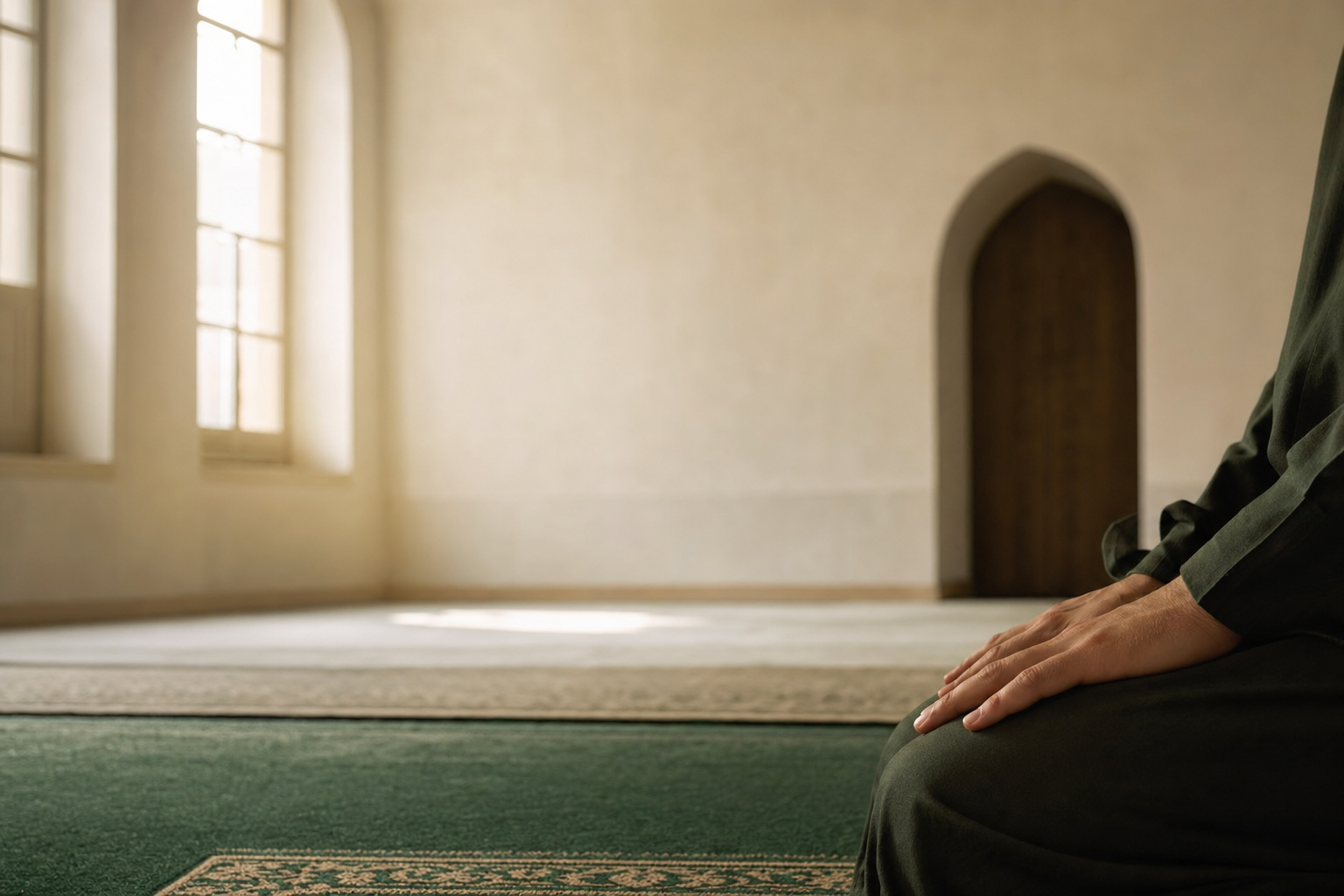
The short answer is: a Muslim man should take praying at the mosque seriously, especially for the obligatory prayers, but “always” needs care. Scholars have differed on the exact ruling of congregational prayer for men who are able, so it is better not to reduce the matter to a casual yes or no. What is clear is that praying in congregation has a special prophetic virtue, and the mosque is not a small part of Muslim life.
At the same time, the first foundation is to guard the five obligatory prayers themselves. If a man is at work, ill, travelling, caring for someone, or facing a genuine difficulty, he should not hear this question as a sentence of failure. He should protect the prayer wherever he is, and then build his relationship with the mosque as much as he honestly can.
Start with the prayer, then improve the place
Sometimes the question “Do I have to go to the mosque?” hides another question: “Am I praying consistently at all?”
That is the first place to be honest, without being harsh. The Qur’an presents guarding prayer as a defining concern of the believer. Before the discussion becomes about distance, parking, timing, or routine, the heart of the matter is whether the five prayers are being protected.
If you are missing prayers often, begin there. Do not wait until your mosque attendance is perfect before you return to salah. Pray on time as much as you can. If you cannot reach the mosque, pray where you are. If you missed, return. If your routine broke, repair it. Allah has not asked you to build your whole life in one day.
Then, once the prayer itself is more stable, ask: which of these prayers can I now bring to the mosque?
That order matters. It keeps the mosque from becoming a source of guilt, and turns it back into what it should be: a place of worship, steadiness, and nearness to Allah.
Do not treat congregation as a small matter
Being gentle with yourself does not mean treating mosque prayer lightly.
The Prophet’s teachings give a clear special virtue to prayer in congregation. There is also particular emphasis reported for Fajr and Isha in congregation. This should make a man pause. If the mosque is close, the time is possible, and there is no genuine barrier, then it is spiritually dangerous to keep telling yourself, “I can just pray at home,” until the mosque disappears from your life.
The masjid protects something in you. You stand in a row with people you did not choose. Rich and poor, old and young, tired and alert, all facing the same qiblah. Your private worship becomes part of the visible worship of the community.
That has an effect. It softens the ego. It interrupts isolation. It reminds you that Islam is not only something you manage alone on your phone, in your room, or between tasks. You belong to an ummah, and the mosque helps you feel that belonging with your body, not only with your thoughts.
Ask about the ruling, but build the habit anyway
Because scholars differ on the exact legal ruling of congregational prayer for men in ordinary circumstances, you should ask someone knowledgeable whom you trust, especially if you are trying to understand what is required in your situation.
But while you are asking, do not wait to build the habit.
A useful question is not only, “What is the minimum?” It is also, “What routine would help my prayer stay alive?” For many men, the mosque is the answer to that second question. A prayer at home can be sincere and accepted by Allah, but home can also be full of interruptions: messages, children, fatigue, unfinished work, or the feeling that you can delay a little longer.
The mosque gives prayer a shape. You hear the adhan or notice the time. You leave what you were doing. You make wudu. You walk or drive. You enter a space built for worship. Even the minutes before takbir become a transition out of the speed of the day.
That transition is a mercy. Many people are not struggling because they do not love salah. They are struggling because they carry the rush of the previous task straight into prayer. The mosque can help you arrive before you begin.
Make your mosque goal realistic
If you currently pray all five at the mosque, thank Allah and ask Him for steadiness. Do not look down on anyone who is not there yet.
If you rarely go, choose one prayer and protect it. Fajr may be powerful, but for some people it is the hardest place to start. Isha may be more realistic. Maghrib may fit your family rhythm. Dhuhr may be possible if there is a mosque near work. Begin with the prayer you can actually keep, not the one that looks most impressive.
If you already attend one, add a second. If weekdays are difficult, protect weekends. If the mosque is far, look for congregation where you are, when appropriate. If your job has fixed constraints, do not punish yourself for what is genuinely outside your control, but do not hide behind constraints that are only habits.
There is a difference between difficulty and neglect. You may need someone knowledgeable to help you tell the difference in your own case.
A small step for today: choose one obligatory prayer this week that you will pray at the mosque, and prepare for it before the time enters. Put the keys where you can see them, make wudu early if possible, and leave a few minutes before you think you need to.