Where Can I Pray If There Is No Prayer Room at the Office?
If your office has no prayer room, look for a clean, quiet, permitted space and plan ahead so salah does not become a daily scramble.
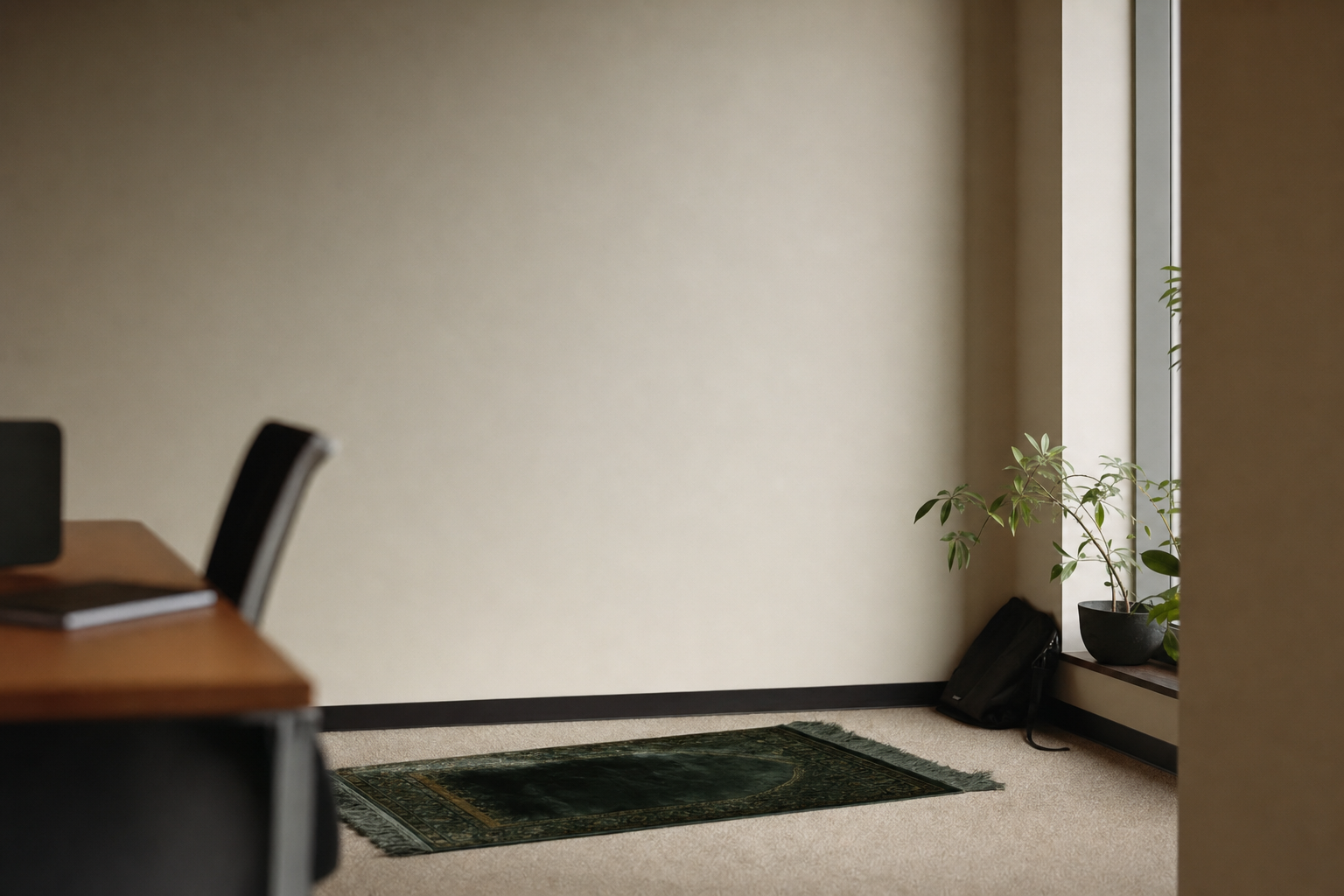
If there is no prayer room at your office, look for a clean, quiet, permitted space where you can pray for a few minutes without blocking others or putting yourself in an awkward situation. A small meeting room, unused office, wellness room, quiet corner, or clean outdoor area may work, depending on your workplace rules.
The best solution is usually not a perfect space. It is a reliable one. If you can find one place, prepare for wudu, and protect a few minutes in your calendar, the day becomes much lighter. You are not asking for luxury. You are trying to guard your prayer in the middle of an ordinary working day.
The Qur’an teaches Muslims to guard their prayers. At work, that does not always look grand. Sometimes it looks like checking a calendar, carrying a small prayer mat, and quietly stepping away before the next meeting begins.
Start with the simplest permitted space
Begin with places that already exist in the office. A bookable meeting room is often the easiest option because it has a door, a calendar, and a clear signal that the space is briefly unavailable. If your workplace system allows it, book ten minutes around the prayer window. You do not need to explain every detail to everyone. A simple private booking may be enough.
If meeting rooms are always full, look for alternatives: an unused office, a quiet training room, a wellness or multi-faith space if one exists, or a low-traffic corner where you will not be in the way. The main concerns are cleanliness, privacy as much as reasonably possible, safety, and permission. Avoid places that cause problems for others, such as blocking corridors, fire exits, storage access, or someone’s workspace.
If you are unsure whether a particular place is suitable Islamically, ask someone knowledgeable. This article is practical guidance, not a fatwa.
Ask early, not at the last minute
It can feel uncomfortable to ask for space to pray, especially if you are the only Muslim in the team. But many workplaces already have a normal process for recurring needs. Check the employee handbook, HR portal, or ask your line manager how to request a short private space or minor schedule adjustment.
You can keep the request calm and practical: you need a few minutes at certain times of the day for prayer, and you are happy to use any suitable private space that does not disrupt work. This is often received better than repeated last-minute searching.
If there are other Muslims in the office, ask them what they do. They may already know a room, a quiet time, or a respectful routine. You may also be able to coordinate so one temporary space serves several people without creating a large disruption.
Prepare the small things before the busy hour
Many prayer struggles at work are not only about the room. They are about the five small decisions around it: Where will I make wudu? Do I have enough time? Is the room free? Where is my prayer mat? Can I step out of this meeting?
Reduce the number of decisions before the pressure begins. If you can keep wudu, do so when it is practical. Know the nearest suitable place to prepare. Keep a compact prayer mat, clean socks, or a small bag at work. Learn which part of the day tends to be hardest.
If you organise meetings, try to check prayer windows before proposing times. You may not always be able to avoid every clash, but early planning is gentler than asking to step out again and again at the hardest moment.
This is not about becoming a flawless planner. It is about making salah easier to return to, even on busy days.
Have a backup plan for difficult days
Some days will be messy. Rooms will be booked. A meeting will run over. Someone will need you urgently. Do not let one difficult day make you feel like you have failed as a Muslim.
Have a backup list. First choice: a booked room. Second choice: another quiet space. Third choice: ask reception, facilities, HR, or a trusted manager if there is a private room available for a few minutes. If your workplace has several floors or nearby buildings, learn whether another area has a better option.
You may also benefit from noticing patterns. If Tuesdays are always difficult, or Dhuhr is easy but Asr is always squeezed, that is useful information. A private tracker or journal such as ThinkDeen can help you see those patterns without turning worship into pressure.
Your aim is consistency, not drama. A quiet, steady plan is better than waiting every day for the perfect room to appear.
Today, choose one possible prayer spot at work and one backup. If you can, place a short calendar hold for the next prayer you usually struggle with.